Independent Australian retro gaming guide

RETROXEL game library guide

Retroxel Play is an independent Australian editorial guide for people exploring RETROXEL: Retro Arcade Games. It is designed to make a changing collection easier to approach, not to stand in for an official title-by-title index. Because the collection changes over time, this guide focuses on useful choices, broad genres and what to check before committing to a particular game.

Retroxel Play is not affiliated with Retroxel, sungjun221 or Google Play, and does not claim access to unpublished catalogue information.

Verified Google Play information

Verified library snapshot

Broad collectionGoogle Play describes hundreds of retro arcade games.
Genre mapPlatformers, shooters and puzzle games are identified broad categories.
Changing libraryNew games are added over time, so the mix should be checked in its current context.
Editorial guidance

How to use this guide

Use the pathways below as a way to browse a changing collection. For a specific title, rely on its current in-app information for availability and instructions; this page does not verify title-specific controls, modes or performance.

View on Google Play (opens in a new tab)
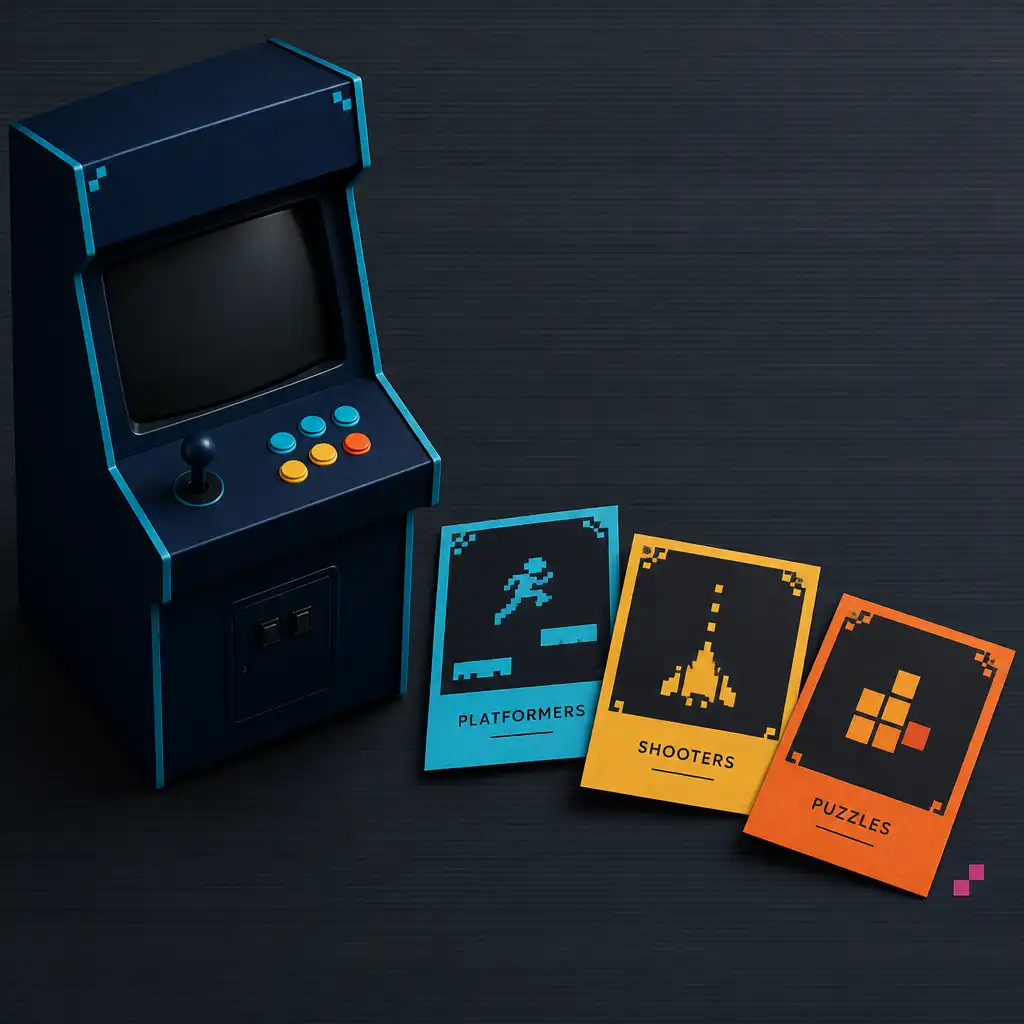
Editorial arrangement of a midnight arcade cabinet silhouette and broad retro genre cards.
Broad genre orientation, not an app screen or a fixed catalogue.
Platformers Shooters Puzzle games Added over time
Reading the library claim

What the library claim means

The broad store description is useful orientation, but it is not a permanent checklist. Reading it carefully helps you use the collection without treating a static guide as a promise about every title you may see.

What is verified

A broad collection, not a fixed checklist

“Hundreds” communicates scale, not a permanent title-by-title inventory that this guide can safely reproduce. Google Play information also says new games are added over time. That means a collection can evolve, so a current app view is the sensible place to check whether a particular title is available rather than relying on an old article or screenshot.

Genres are a useful starting map

Platformers can orient a player looking for movement-led play.

Shooters can signal a faster, reaction-led mood.

Puzzle games can suit more deliberate experimentation.

These are confirmed broad categories, while the exact mix within each category can change. Treat them as orientation rather than a definitive taxonomy.

Editorial guidance

Check the current context before deciding

When a decision depends on a particular title, availability, advertising or purchase information, use the current in-app context and the official Google Play listing. That is practical caution, not a claim about any one screen or menu. Ads, in-app purchases and catalogue content can change, so neutral checking is more useful than assumptions.

  • Read the title’s current information.
  • Check current store disclosures where relevant.
Editorial starting points

Browse by your preferred arcade pace

The confirmed genre families offer a simple first direction. They describe a possible style of challenge, not a guarantee about any individual RETROXEL title.

Illustrative pixel-art editorial scene with a small adventurer silhouette moving across stepped blocks.
Editorial starting point

Platformers: movement-led sessions

Platformers can be a sensible first direction if you enjoy timing, routes and learning space through movement. Let the individual title explain itself before you assume familiar arcade conventions apply. A short first look, with attention to any title-specific instructions presented, is a practical way to decide whether its pace feels right for you.

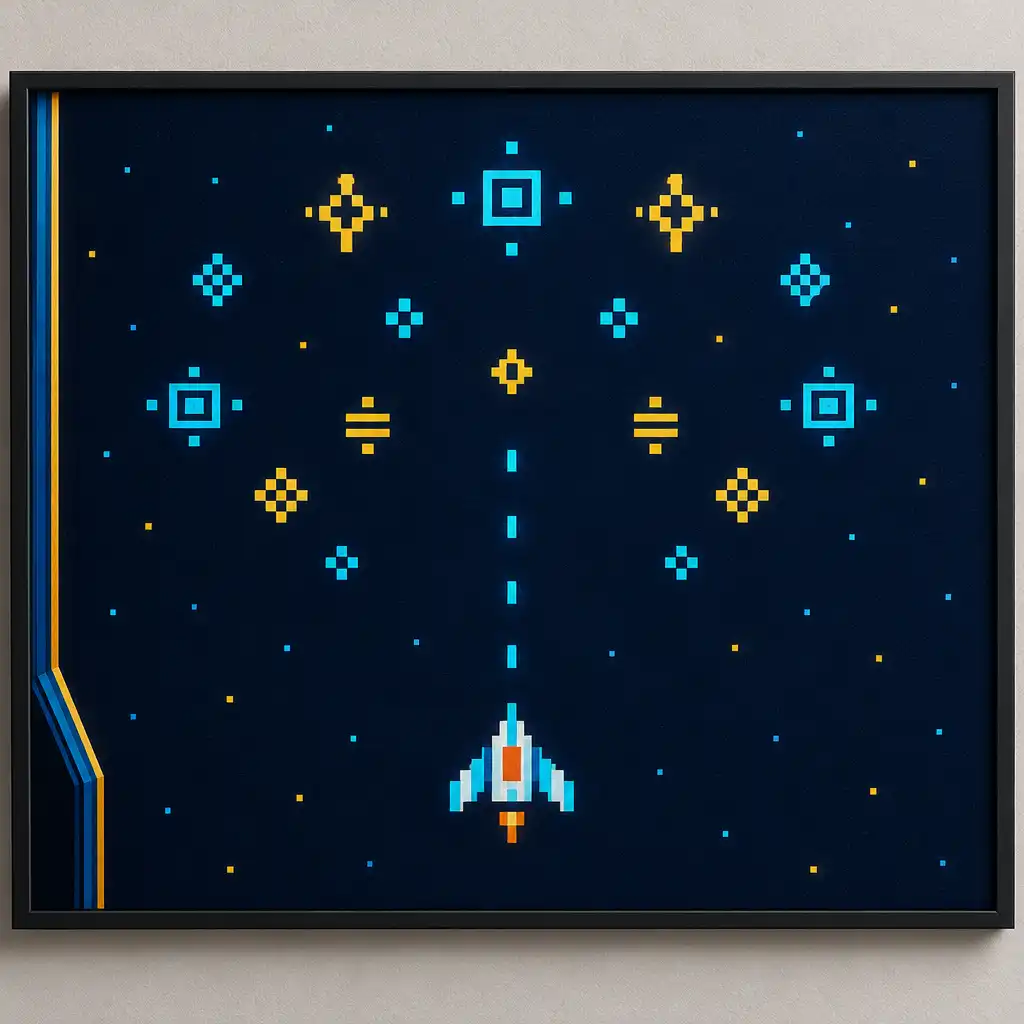
Illustrative pixel-art editorial scene with an abstract spacecraft facing separated geometric signals.
Editorial starting point

Shooters: immediate pressure and pattern reading

Shooters may appeal if you are drawn to quick reactions, observing patterns and repeatable arcade attempts. That is a genre preference, not evidence of identical rules or inputs across the collection. Give a new title a low-commitment first session, notice what it asks of you, and move on if the current pace is not the experience you wanted.

Illustrative arrangement of colourful chunky pixel blocks forming an incomplete geometric path.
Editorial starting point

Puzzles: deliberate experimentation

Puzzle games can be a useful direction for players who prefer solving, testing patterns and taking a more considered approach. A broad label does not reveal a particular mechanic, so pause long enough to understand the objective presented by the individual title. If that objective is unclear, trying another game is a reasonable part of exploring a large library.

A repeatable browsing method

A practical way to choose a first game

You do not need a fixed title list to make a useful first choice. This editorial sequence keeps the decision focused on your preference and on the information each title currently presents.

  1. 01

    Start with the mood you want

    Before browsing, decide whether you want movement, fast reactions or a more thoughtful challenge. Platformers, shooters and puzzle games provide those broad starting directions. This is simply a way to reduce choice overload: ask whether you want to explore space, respond quickly, or spend time testing an idea.

  2. 02

    Read the individual title’s own cues

    Use the title-specific information available in the app to understand its objective and instructions before assuming that familiar retro conventions apply. Retro-style presentation does not guarantee identical rules from one game to another. Treat what the current title presents as the useful reference, rather than importing a control scheme or mode from a different game.

    Title-specific details matter
  3. 03

    Give the first attempt a clear purpose

    Use an initial attempt to learn the objective, pace and response expected by that particular game. It can be more useful than judging solely from the first visual impression. Look for the basic goal; then decide whether the rhythm feels enjoyable enough to continue. This is editorial advice for unfamiliar arcade-style titles, not a universal session rule.

  4. 04

    Keep a simple next-step rule

    Choose whether to try again, sample another genre or revisit later based on enjoyment and clarity, not on an assumed catalogue order. Switching genres is a normal way to explore a large collection. You do not need to persist with a title that is not making sense yet; player agency is more useful than guesses about favourites, sorting or saved preferences.

Accuracy before assumption

Why title-specific information matters

The safe answer is no assumption: this guide does not verify one universal control layout, button count, controller arrangement or mode across the collection.

Editorial accuracy note

A broad retro arcade collection can contain varied game types. For accuracy, rely on the individual title’s displayed instructions and current context rather than assuming a shared scheme. This boundary is not criticism; it is a way to avoid presenting unverified details as fact.

What genre can tell you

Platformers may suggest a movement-centred style of challenge.

Shooters may suggest reaction and pattern observation.

Puzzle games may suggest problem-solving and experimentation.

These are general genre expectations, not guarantees of exact inputs, objectives or rules.

Not verified by this guide

What genre cannot confirm

A genre label cannot verify title-specific controls, difficulty, session structure, performance or availability. Check the current title information before deciding whether it suits you. This page deliberately does not infer a help screen, a fixed input method or any shared mode from a broad category name.

Beginner approach

Use a short session to learn, not to prove anything

For an unfamiliar arcade-style title, a first attempt can be a chance to observe rather than a test you need to pass.

Notice the goal before chasing a result

Identify what the title asks of you through its own presented cues before worrying about a score, speed or outcome. Not every unfamiliar game will communicate in the same way, and this mindset avoids assuming that every title uses the same scoring system or objective. It is particularly helpful for players who are new to retro games and want a calmer first read.

Observe. Decide. Explore.

Let an initial attempt reveal whether the current title feels movement-focused, reaction-focused or more deliberate. Then decide whether to continue or explore another category. The site’s platformer, shooter and puzzle paths are editorial orientation, not permanent verified lists, so treat them as a starting point rather than a label you must follow.

Check current information

Keep practical details current

Ads, in-app purchases, title availability and store information can change. For a transactional decision, current app information and the official Google Play listing (opens in a new tab) are more reliable than a static guide. Presence and presentation can vary over time.

A changing collection

Catalogue updates and changing details

Freshness matters because a guide can be useful without pretending to monitor a live catalogue.

Verified Google Play information

What is confirmed about updates

Google Play information says new games are added over time. That supports treating the collection as evolving rather than fixed. It does not tell us a release frequency, a schedule or what may happen to any particular title, so this guide does not infer those details.

Why static lists age quickly

A title-by-title list can become inaccurate as a collection changes. That is why this page concentrates on categories and decision-making rather than claiming a complete inventory. The practical benefit is straightforward: you are less likely to pursue stale information when you check a current app context for a specific title.

What to check at the point of choice

  • Check the title currently shown in the app and its own current instructions.
  • Use the official Google Play listing for current store information, including ads or in-app purchase disclosures where shown.
  • Keep the app identification handy if you need to confirm the listing.

App identification: com.sjkim.retroxel2

Quick clarification

Questions readers commonly have about the library

Green labels identify supplied Google Play facts; yellow labels identify Retroxel Play editorial guidance.

Independent, not official

Independent editorial disclosure

Retroxel Play is an independent Australian editorial website. It is not affiliated with Retroxel, sungjun221 or Google Play. This guide does not imply endorsement, partnership or access to unpublished catalogue information; it is intended to help readers interpret the supplied broad store facts and make careful browsing choices.

How claims are separated

Verified Google Play information

These labels refer to supplied Google Play facts, including the broad genre scope and that new games are added over time.

Editorial guidance

These labels identify Retroxel Play’s practical interpretation. Verify changing catalogue, advertising, purchase and in-app details at the point of decision.

Current store details

Find the current RETROXEL listing

For current store information, view RETROXEL on the official Google Play listing. Retroxel Play does not distribute the app or provide unofficial downloads. Where shown, the listing is the appropriate place to check details relevant to ads or in-app purchases.

View on Google Play (opens in a new tab)

Google Play package ID: com.sjkim.retroxel2